
Blog
Can a browser extension actually prevent “blind signing” in DeFi—and is Rabby the practical answer?

Most experienced DeFi users have lived the momentary panic: a wallet popup with a blob of hex, an unfamiliar gas estimate, and a smart contract call that could move funds. The routine temptation—approve and forget—creates a predictable attack surface. Rabby Wallet, a DeBank project, intentionally targets that gap by shifting the trade-off from convenience-versus-safety to “convenience plus a readable pre-flight.” But technical fixes always have limits. This piece explains how Rabby’s extension architecture works, what it protects against, where it fails, and how a US-based power user should treat it in an operational security stack.
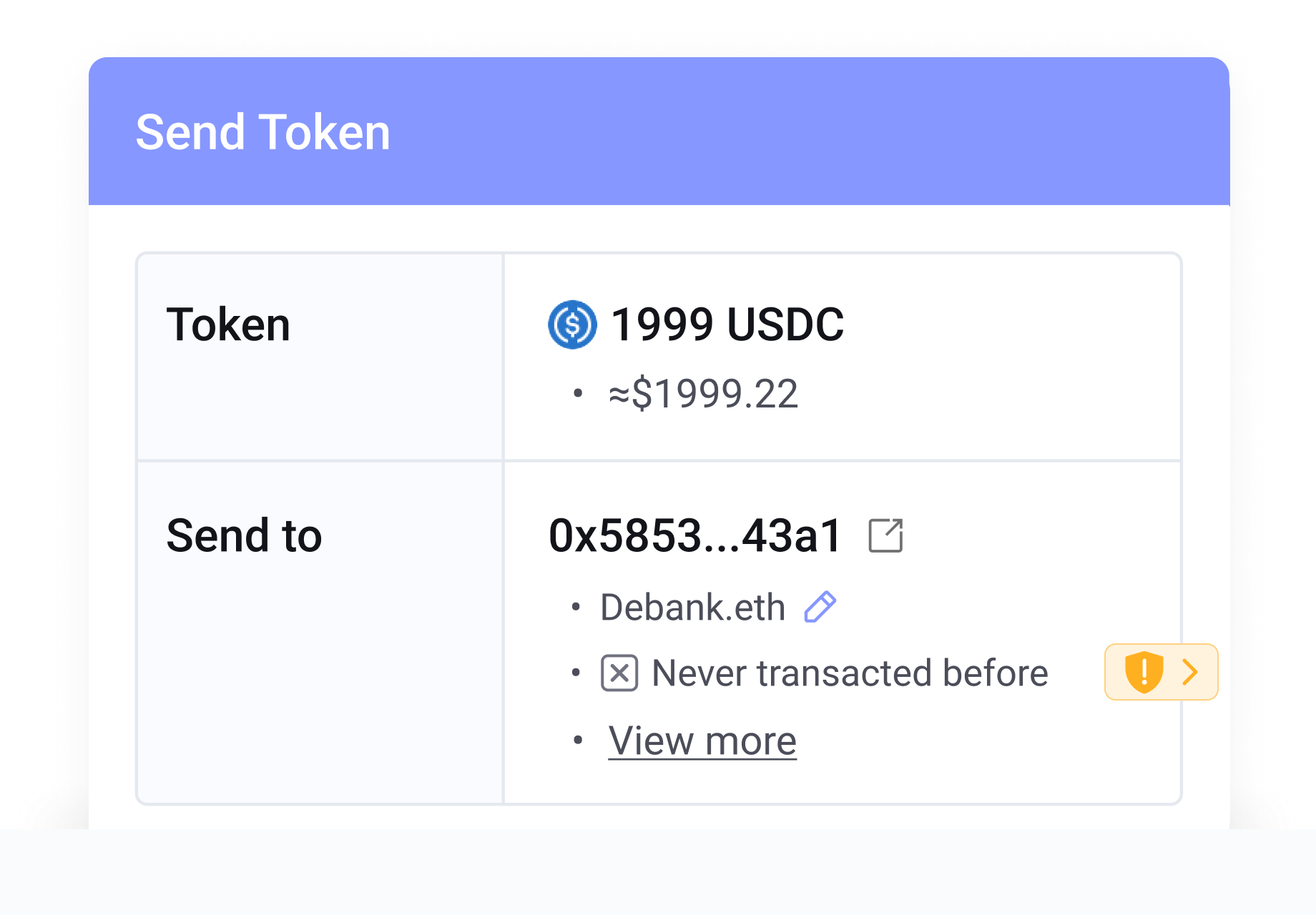
Start with the mechanism: Rabby simulates every transaction before the user signs. Instead of an opaque signature request, the extension shows estimated token balance changes and fee costs, and runs pre-transaction risk scans for known compromised contracts and suspicious approval patterns. Those are concrete mechanisms with measurable outcomes: clearer decision inputs and fewer opportunities for tricking users into signing malicious operations. Yet simulation and scanning are not perfect shields—they are probabilistic defenses that depend on data feeds, heuristics, and the wallet’s integration model.
How Rabby’s extension architecture changes the signing flow
Mechanism first: a browser extension sits between the dApp and your private key. When a dApp requests a signature, Rabby intercepts the call, reproduces it in a simulated environment, and then shows you human-readable effects—token deltas, who receives assets, and gas cost estimates. That simulation does two things simultaneously. Operationally, it gives the user a transparent outcome to decide on; technically, it creates a check that an attacker must replicate or subvert to succeed.
Rabby extends that mechanism with pre-transaction risk scanning and approval revocation. The scanner flags previously exploited contracts, non-existent recipient addresses, and suspicious approval requests before you sign. The revocation tool then lets you unwind previously granted allowances—crucial because many DeFi hacks exploit unlimited token approvals rather than private key exfiltration. Add hardware wallet compatibility (Ledger, Trezor, Keystone, CoolWallet, GridPlus, BitBox02) and you raise the bar further: cold keys plus simulation reduces remote signing attacks dramatically.
What it actually prevents—and what it doesn’t
Prevention wins. Rabby materially reduces the risk of “blind signing” attacks and sloppy approval exposure. For a US-based trader hopping between Uniswap, Curve, and L2s, the automatic network switching and cross-chain gas top-up are practical time-savers that also reduce error risk (sending ERC-20s on the wrong chain is a real loss). Multi-chain support—over 90 EVM networks—means one consistent interface instead of juggling multiple wallet clients.
But there are boundary conditions. The simulation depends on correct and up-to-date state: off-chain oracles, recent contract changes, or freshly deployed malicious proxies can evade heuristics. The scanner can only flag what it knows to look for; zero-day contract exploits or cleverly obfuscated approval flows can pass undetected. In 2022 Rabby experienced a related incident where a Rabby Swap contract was exploited (roughly $190k loss); the team froze the contract and compensated users, but that episode is a reminder: wallet tooling reduces, not eliminates, systemic smart contract risk.
Another practical limitation: Rabby lacks a fiat on-ramp and native in-wallet staking. For US users who want a single app to buy, stake, and interact with DeFi, Rabby is not a one-stop solution. Instead it focuses on transaction clarity, approval hygiene, and multi-sig/institutional integrations (Gnosis Safe, Fireblocks, Amber, Cobo Wallet) — targeting power users and institutional flows rather than retail onboarding.
Where Rabby sits compared with alternatives—and why that comparison matters
MetaMask, Trust Wallet, and Coinbase Wallet remain the familiar incumbents. Rabby differentiates itself by embedding transaction simulation, automatic network switching, and an approval revocation workflow in the browser extension experience. That sounds small, but for active DeFi traders those features change behavior: users are less likely to approve open-ended allowances and more likely to catch token drain before it happens. For institutional or multi-sig setups, Rabby’s integrations with Gnosis Safe and custody partners let teams preserve workflow control without sacrificing simulation visibility.
Trade-offs: MetaMask’s dominance gives it broad dApp compatibility and name recognition; Rabby’s advantages are security-first UX and richer pre-sign intelligence. If you prioritize the lowest friction for casual swaps, convenience may win. If you operate with sizable asset exposure across chains, Rabby’s risk-reduction affordances are decision-useful.
Operational checklist for a US DeFi power user
Here’s a compact heuristic you can apply immediately.
1) Use hardware keys for high-value accounts and pair them with Rabby’s extension to combine cold storage with readable pre-sign simulations. 2) Treat automatic revocation as routine hygiene: review approvals monthly or after large interactions. 3) Rely on Rabby’s simulation as an evidence-rich second opinion, not as absolute proof—double-check contract code links for unfamiliar contracts if you’re moving significant funds. 4) Keep a small operational ETH/BNB balance on each chain or use the cross-chain gas top-up to avoid last-mile failures. 5) For custody-sensitive flows, integrate Rabby with multi-sig or enterprise custody rather than sole reliance on a single-extension signing model.
What to watch next (conditional signals)
Rabby’s value will track three observable signals. First, expansion of its threat intelligence feeds and faster distribution of contract incident data will reduce false negatives in pre-transaction scanning. Second, any move to add fiat on-ramps or staking could broaden Rabby’s audience but would also change its threat model—on-ramps require AML/KYC integrations and introduce new attack surfaces. Third, wider institutional adoption (more multi-sig or custody integrations) would indicate that Rabby’s model is maturing beyond retail tooling into operational risk management.
Each of these developments would be a conditional improvement: better intelligence reduces undetected risk; fiat integration increases convenience but shifts compliance responsibilities; institutional uptake implies scalability but also higher-value targeting by adversaries.
FAQ
Does Rabby’s transaction simulation guarantee I won’t be hacked?
No. Simulation and risk scans substantially reduce certain classes of attacks—especially social-engineered blind signing and sloppy approvals—but they are probabilistic defenses. They depend on the accuracy of the wallet’s contract databases, heuristic rules, and internal simulation engine. Combine Rabby with hardware wallets, revocation hygiene, and cautious dApp vetting for stronger protection.
Can I import my MetaMask wallet into Rabby safely?
Yes. Rabby supports importing wallets via seed phrase or private key and includes a ‘Flip’ toggle to switch between Rabby and MetaMask in the browser. Importing is straightforward, but follow standard operational security: import only on a secure machine, never paste your seed phrase on an untrusted site, and consider moving high-value funds to a new hardware-backed account after import.
How does Rabby handle network switching across many L2s and sidechains?
Rabby automatically detects the network required by the dApp you visit and switches for you, reducing manual errors. Automatic switching is a convenience and a safety feature, but it can obscure the underlying chain if the dApp falsely advertises network info—so confirm network names and balances for large transactions.
Where can I download Rabby and get started?
For the extension and other clients see the project’s official distribution channels; for one convenient entry point and links to supported clients, consult rabby.
Bottom line: Rabby’s extension reframes a common DeFi insecurity—blind signing—by providing readable, simulated pre-flight checks and active approval controls. For US-based traders and institutional teams the value is operational: fewer surprises, clearer allowances hygiene, and a consistent multi-chain interface. The wallet is not a panacea; it is a carefully targeted mitigation that should be combined with hardware keys, periodic audits of approvals, and ongoing vigilance about fresh contract exploits. Treat Rabby as a strong tool in a layered defense model rather than as a final firewall.